 Kanada FR
 USA
USA Großbritannien
 Europäische Union
 New Zealand
 Australia






























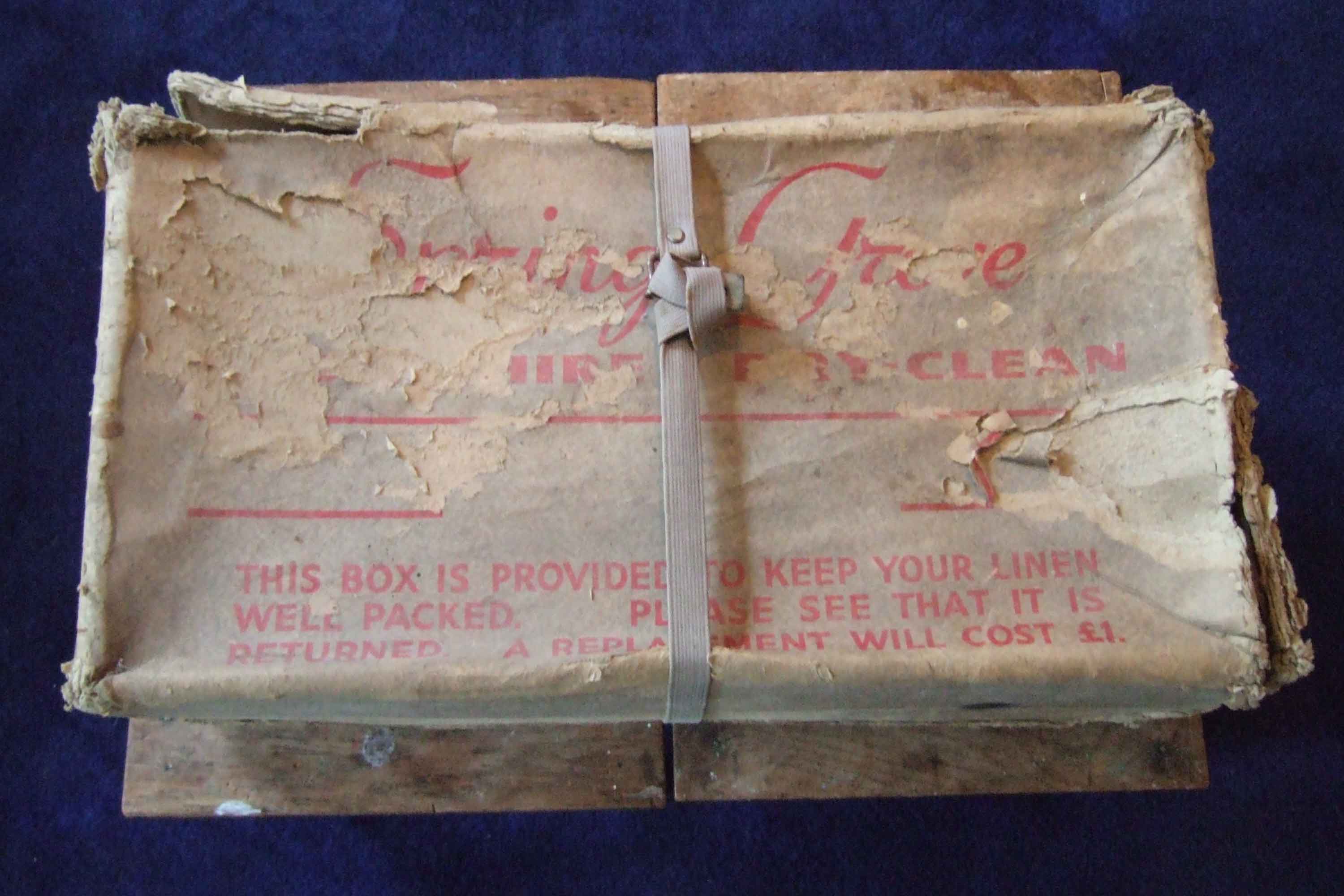
What does it feel like to find a box of Thames finds in the attic that hasn't been opened for almost a century? You can just imagine it, can't you?! A dusty box in a dark corner, seductive and mysterious. What treasures are hidden inside? Well, that's pretty much exactly what happened to me recently, and today I'd like to tell you about a few finds that have been rediscovered more than a hundred years after they were first found in the mud of the Thames.

Imagine: London in the 1920s. Teenager Adrian Beare - born in 1912 to Lennie and Dolly Beare - walks along the Thames in London and is fascinated by the objects he sees there at low tide. He starts collecting them: animal bones and teeth, pottery, clay tobacco pipes... the same things we pick up today when we're on the bank. Adrian is particularly fascinated by things that look like prehistoric tools and worked flints. He carefully picks them up and marvels at the fact that he is probably the first person to touch them in thousands of years. He picks up all these finds, puts them in his pockets, takes them home and puts them in a large box. One day he closes the box for the last time. But it is passed down from generation to generation and remains in his family's possession to this day. Last year I was lucky enough to meet Adrian's grandson and great-grandson. Together we opened the box and I discovered the artifacts that Adrian, a mudlarker in the 1920s, had found!
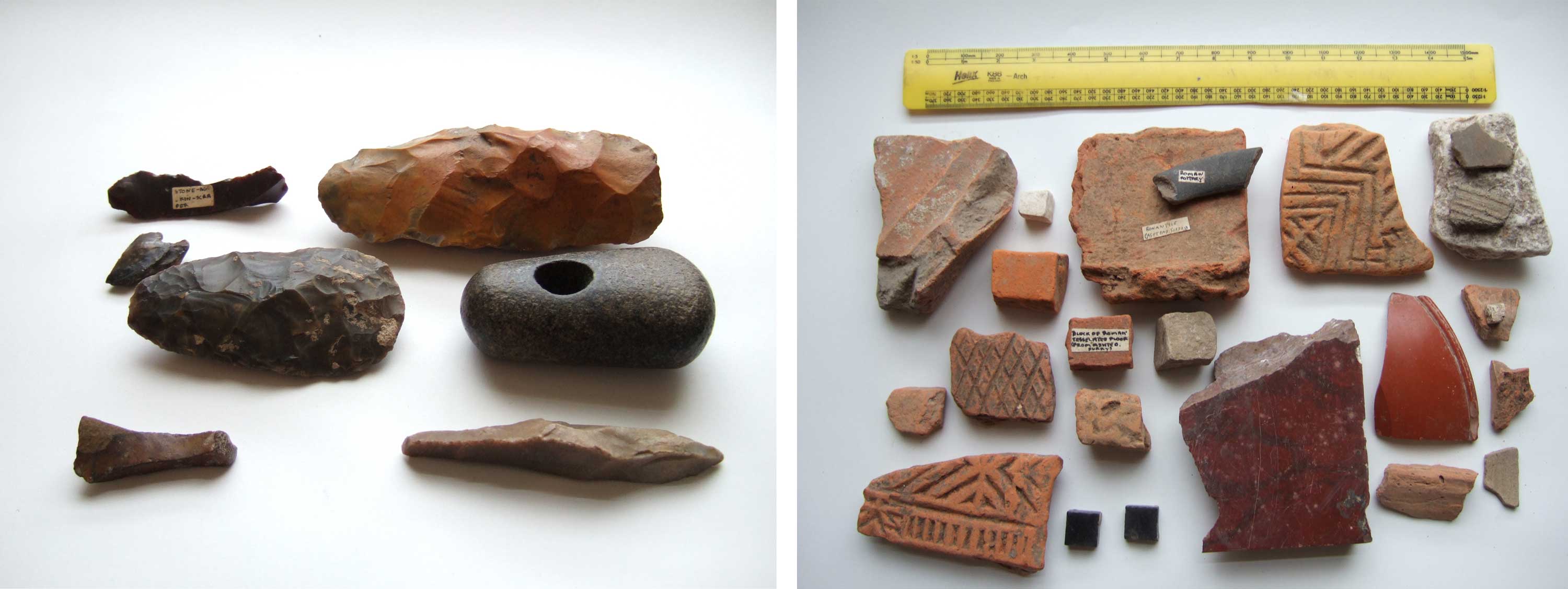
It was incredible to hold Adrian's finds in my hands and examine them closely. There is a considerable amount of Roman and Iron Age pottery, including a fragment of a Roman floor tile and a beautiful fragment of Terra Sigillata, a specific category of Roman ceramic tableware. The finds that really impressed me, however, were the Neolithic and Mesolithic flint tools, made by people thousands of years ago. I admired the striking head of a mace, which would have taken a person in the Mesolithic period days to make. There were also flint blades among the finds, which were used for scraping and cutting animal hides.
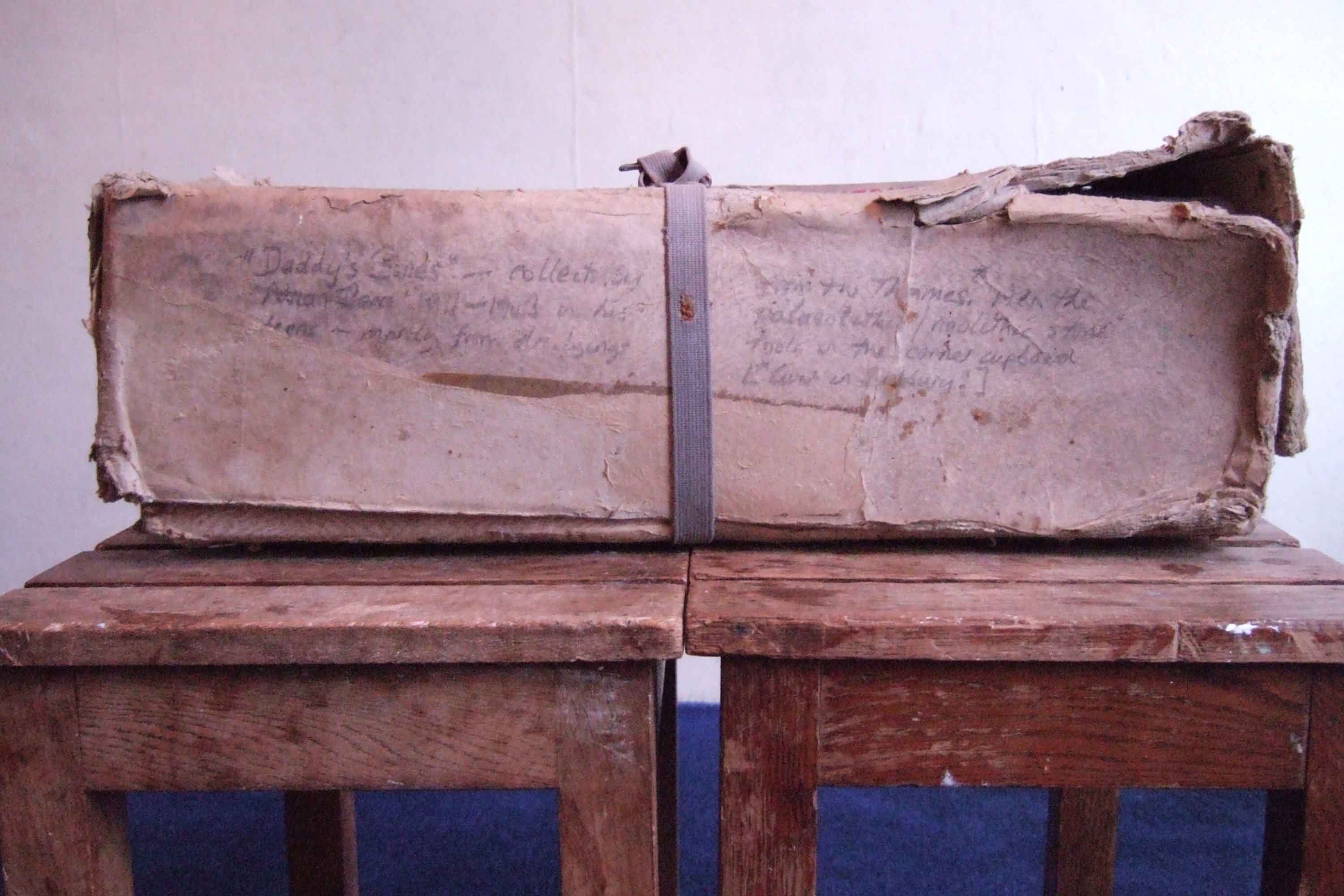
Even the box is an artifact! It's an old laundry trunk with "Daddy's collection" written on it in childish handwriting, which Adrian's young son Tony wrote in the 1940s. Tony also penciled in the dates 1912-1943. I learned that these were Adrian's birth and death years. Tragically, Adrian volunteered for the Royal Air Force during the Second World War. On July 7, 1943, he was part of a five-man crew of a fighter plane. The plane crashed and all six men on board died. Adrian left behind his wife and two sons.
Adrian died far too young, but one of his legacies is this "treasure collection" from the Thames. I'm so glad this collection stayed in the family. It must have brought his sons comfort when they played with the contents of the box. And years later, Adrian's memory was rekindled when we all sat together, looking at his finds and imagining his adventures as a "mudlarker" on the banks of the Thames.
If you would like to find out more about the contents of the box and about Adrian Beare himself, you can watch my YouTube video https://youtu.be/gMLgtrEOC_0
About Tideline Art
This is Nicola White, self-proclaimed "mudlarker" and founder of Tideline Art. Nicola regularly uploads videos to her YouTube channel, showcasing her incredible treasures and finds. Over the next 12 months, Nicola will be sharing her fascinating stories and finds with us on the Muck Boot blog!
When I moved from Cornwall to London over twenty years ago, I had no idea that the River Thames would reveal such a fascinating and magical world to me, and that its muddy banks would uncover a myriad of historical secrets and figures from the past at low tide. I was used to walking along windy beaches in Cornwall and discovering finds, but I never thought that something similar could be possible in an urban environment like London.
Follow Nicola White
Instagram – https://www.instagram.com/tidelineart/?hl=en
Facebook – https://www.facebook.com/NicolaWhiteTidelineArt/
YouTube – https://www.youtube.com/channel/UC2K7yEwPIcPaQT5FM78dpyw
More about mudlarking
The story of the 19th century pewter jug
Friends, finds and the agony of choice on the banks of the Thames
Related product