 Kanada FR
 USA
USA Großbritannien
 Europäische Union
 New Zealand
 Australia














The “Saving Wildcats” partnership project has reached several significant milestones this year, including the birth of 22 wildcats at the conservation breeding for release centre, located in a quiet area away from visitors to the Royal Zoological Society of Scotland’s Highland Wildlife Park.
These kittens could be the first of their kind to be released into the wild in the UK. However, the "Saving Wildcats" team still has a lot to do to prepare the lively little wildcats for their first releases, which are planned for 2023.

Currently, the kittens are still living with their siblings and mothers in natural breeding enclosures, which have provided the mothers with perfect conditions for giving birth and raising their kittens into proud (but smaller) versions of themselves. Wildcats are solitary animals and usually leave their mothers at six to eight months of age. The young animals are moved to other enclosures before release to mimic this natural process. Each wildcat kitten needs space to develop its innate hunting and tracking skills, to improve its climbing skills on structures specially designed for its natural habitat, and to learn how to find dens that protect it from the harsh Highland weather. It is important that the enclosures where the wildcats are kept before release offer them these opportunities to prepare them for the challenging life in the wild.
The “Saving Wildcats” team is currently building and setting up these large enclosures, which is no small feat! Fortunately, the project team is supported by dedicated volunteers - as part of the volunteer program of the Cairngorms National Park Authority.

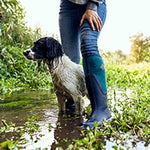
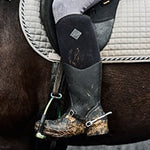
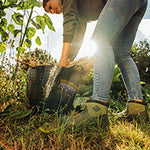
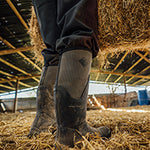
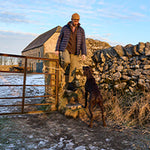
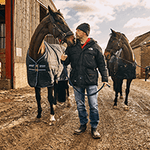
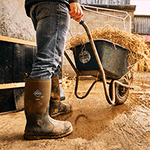
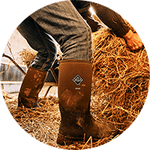
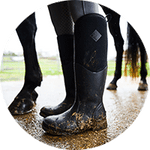
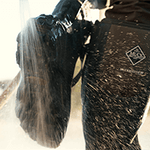
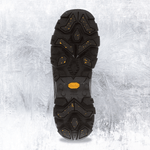
The team worked through rain and mud, their trusty Muck Boots keeping their toes dry and their ankles supported while they hauled logs, dug holes, erected fences, and built climbing structures. We are very grateful to Muck Boots for providing our team with boots that can withstand the high demands we place on them!
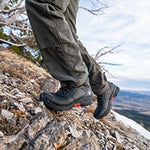
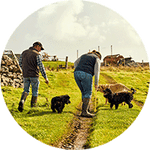
Our field team has also made many preparations in the potential release area to collect more ecological data that will help us understand how the wildcats might react after their release. Whether it was finding signs of rabbit burrows or traversing muddy fields to replace batteries in remote camera traps, our team really puts Muck Boots to the test.

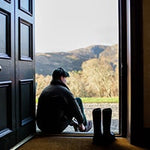
We are excited to see what next year brings and hope to begin reintroducing wildcats to the Scottish landscapes where they belong (in our Muck Boots, of course!). We would love for you to stay up to date with our project by signing up for our newsletter.
About the “Saving Wildcats” project
The “Saving Wildcats” project is led by the Royal Zoological Society of Scotland (RZSS) in partnership with NatureScot (formerly Scottish Natural Heritage), Forestry and Land Scotland (FLS), the Cairngorms National Park Authority (CNPA), Norden's Ark, and Junta de Andalucía.
The project is funded by the European Union's LIFE program and with the generous support of the Garfield Weston Foundation, the National Trust for Scotland, the People's Trust for Endangered Species, and the European Nature Trust.
More about the "Saving Wildcats" project
Related product