 Kanada FR
 USA
USA Großbritannien
 Europäische Union
 New Zealand
 Australia

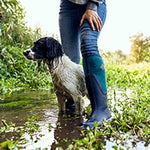

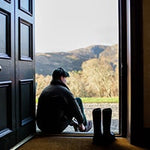
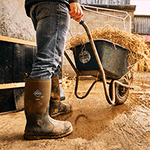

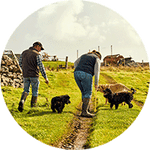





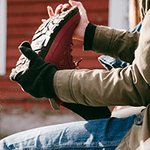
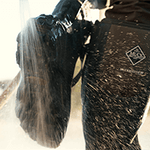




Spring this year looked a little different for us than last. My partner and I have always worked as a team, and nothing tests a team more than a combination of immense stress, exhaustion, hunger, and pressure. For most farmers, this is what a normal lambing season looks like, but this year we added a few extra hurdles to keep us on our toes.
I vividly remember seeing signs on farms as a child warning pregnant women not to touch farm animals. One sign, I believe, even warned pregnant women not to enter the area where you could hand-feed the already well-fed goats and donkeys. After a quick Google search, it became clear that there was indeed a risk of a pregnant animal transmitting diseases to a (human) mother, who would then pass them on to the fetus. In particular, amniotic fluid contains bacteria that, if ingested by the mother, can cause illnesses that can even be fatal to the baby. Of course, it's up to each individual, but we collectively decided that, no matter how difficult it was, I would not come into contact with pregnant ewes or goats, nor with their newborn lambs or kids. For us, it wasn't worth the risk. Our unborn baby meant too much to us for that.

We considered hiring someone to help, but before we knew it, the first lambs arrived, so we just managed on our own. We asked our families for help, and a friend came and stayed on the farm to assist on some of the busiest days. Someone must have been looking down on us, because not only were the girls incredibly "tight" with lambing (many births within a short period), but the vast majority also managed without our help. I thank fate for this lucky turn of events. However, we also chose sensible rams, which made lambing easy. Chris says my hands are his secret weapon because they are so small and nimble. This allows me to help deliver lambs where most would need assistance or a vet would have to perform a caesarean section. This means we were a little worried about what it would mean for me not to be able to get my hands dirty (I apologize for the pun).

We considered hiring someone to help, but before we knew it, the first lambs arrived, so we just managed on our own. We asked our families for help, and a friend came and stayed on the farm to assist on some of the busiest days. Someone must have been looking down on us, because not only were the girls incredibly "tight" with lambing (many births within a short period), but the vast majority also managed without our help. I thank fate for this lucky turn of events. However, we also chose sensible rams, which made lambing easy. Chris says my hands are his secret weapon because they are so small and nimble. This allows me to help deliver lambs where most would need assistance or a vet would have to perform a caesarean section. This means we were a little worried about what it would mean for me not to be able to get my hands dirty (I apologize for the pun).

More from The Chief Shepherdess
Zoe Colville on Sheep Shearing
Lifestyle Changes